Built to operate like a strategic advisory firm, not a benefits shop.
FP4H exists for employers that want to manage healthcare as a financial system — with better structure, better visibility, and sharper executive decision-making.
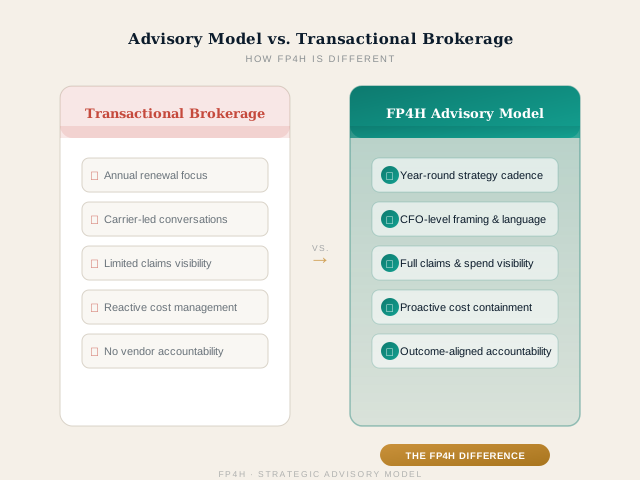
Benefits should support margin, talent, and risk management — not just renewal compliance.
FP4H brings executive structure to healthcare strategy so employers can make more informed decisions across funding, spend, and workforce experience — year-round, not just at renewal.
"This is strategy-first work intended for growing employers that want more control, more rigor, and a clearer financial story."
What makes FP4H different
CFO-Level Framing
Every conversation starts with volatility, exposure, and EBITDA impact — not plan design features.
Proprietary Visual System
Frameworks that help leadership quickly understand problems, priorities, and where action is needed.
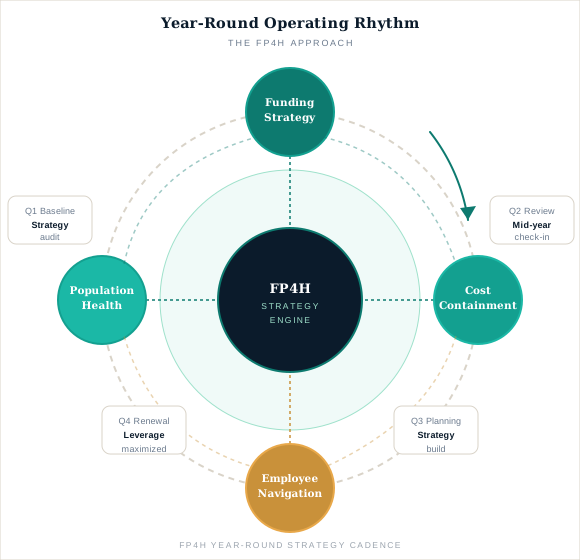
Year-Round Operating Rhythm
Not just a renewal discussion — a structured system that builds leverage and clarity throughout the year.
Outcome-Aligned Accountability
Vendors, programs, and partners are evaluated against measurable financial and clinical outcomes.
Who FP4H is built for.
FP4H serves a specific kind of employer — one ready to move from reaction to a structured, managed system.
25–500 Employees
Large enough to feel the financial weight of healthcare volatility, and ready for a more disciplined management structure.
CFO + HR Leadership
Teams that want to connect benefits decisions directly to business performance, P&L impact, and workforce outcomes.
Growth-Oriented Companies
Organizations that understand healthcare cost is a margin issue — and want a strategy to match their growth ambitions.
Strategy before product. Structure before renewal.
Most benefits conversations start with plan design and carrier options. FP4H starts with the financial picture — where you are exposed, what your real cost drivers are, and what a structured strategy would change.
From there, we build around the four pillars: funding strategy, cost containment, population health, and employee navigation. Each pillar connects to a measurable business outcome — not just a benefit feature.
See how structured your healthcare strategy really is.
Start with the FP4H Diagnostic to benchmark your current position and identify the highest-priority gaps.