A focused conversation on cost, exposure, and next-step strategy.
This is a working strategy session — not a sales pitch. We'll use your time to identify where your plan is leaking cost, clarify structural options, and define what a more disciplined approach would look like.
Cost leakage review
Where margin may be slipping across funding, network, Rx, or vendor choices.
Strategy maturity snapshot
Where your current approach is reactive, managed, or optimized across the four pillars.
Next-step priorities
A focused conversation about the highest-leverage opportunities for your situation.
conversation
full benefits strategy
for leadership
product presentations
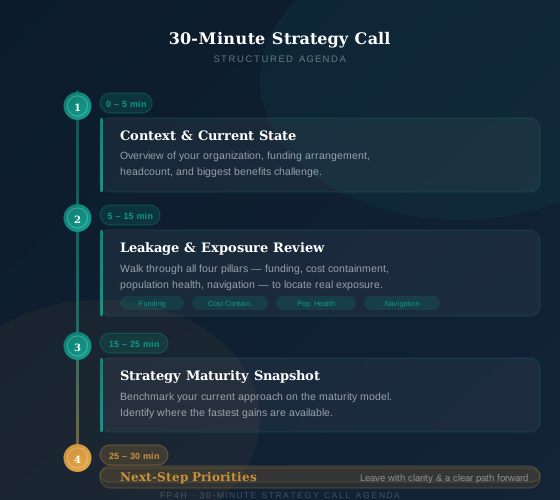
What the 30 minutes looks like.
Every call follows a structured agenda designed to surface the most relevant gaps and priorities for your specific situation.
min
Context & Current State
Quick overview of your organization, headcount, current funding arrangement, and the biggest cost or strategy challenge you're facing.
min
Leakage & Exposure Review
Walk through the four pillars — funding, cost containment, population health, and navigation — to identify where the real exposure is sitting.
min
Strategy Maturity Snapshot
Benchmark where your current approach sits on the maturity model — reactive, aware, managed, or optimized — and where the fastest gains are.
min
Next-Step Priorities
Leave with a clear picture of the two or three highest-leverage actions — and whether a deeper FP4H engagement makes sense for your organization.
Who gets the most from this call.
The strategy call is designed for a specific kind of employer — one ready to have a different conversation about healthcare cost.
CFOs & Finance Leaders
Employers where healthcare is a meaningful P&L line item and leadership wants better visibility and control over trend.
HR Directors & VP HR
HR leaders who want to elevate benefits from an administrative function to a strategic business tool with measurable outcomes.
Growth-Stage Companies
Organizations scaling headcount where healthcare cost volatility is becoming a real threat to EBITDA and talent strategy.
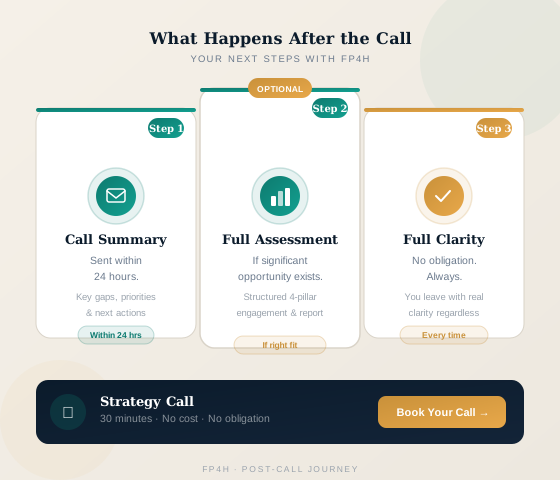
What happens next.
The call is designed to give you immediate clarity. What comes after depends entirely on what makes sense for your situation.
Before you book.
No. The strategy call is a working session, not a product pitch. The goal is to give you genuine clarity about where your healthcare strategy stands and where the real opportunities are — regardless of whether a deeper FP4H engagement is the right next step.
No preparation required. If you've completed the FP4H Diagnostic, bring your scorecard — it makes the conversation sharper from the start. Otherwise, just come with a general sense of your current plan arrangement, company size, and your biggest benefits-related challenge.
The call is most productive with whoever owns the intersection of benefits and business finance — typically the CFO, VP HR, or CEO. It doesn't need to be a large group. One or two decision-makers is ideal for a focused 30-minute session.
That's completely fine. Many employers use the strategy call to benchmark their current broker relationship and understand what a more structured advisory approach would add. The conversation is about strategy and outcomes — not about replacing any current relationship without good reason.
No. The initial strategy call is complimentary. If a deeper assessment or ongoing engagement is the right next step, that will be discussed openly and scoped clearly — with no ambiguity about what is and isn't included.
Start with the diagnostic first.
Take the FP4H 12-question scorecard to benchmark your current strategy across all four pillars. It takes under 5 minutes and gives the call a sharper starting point.